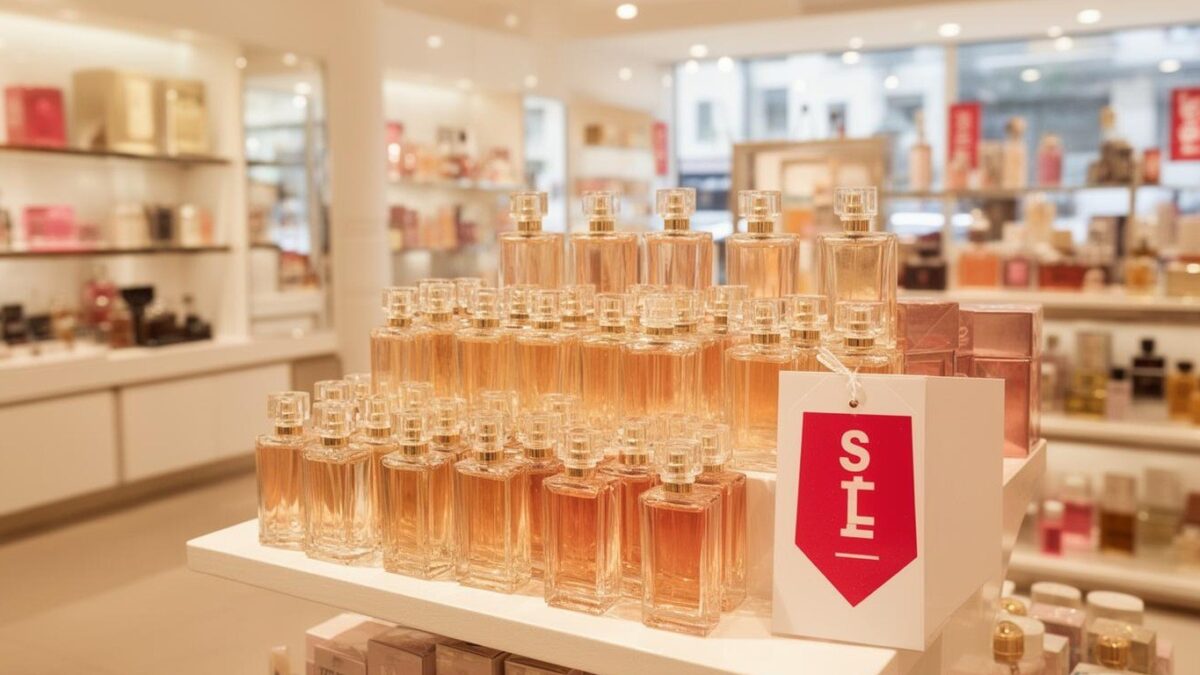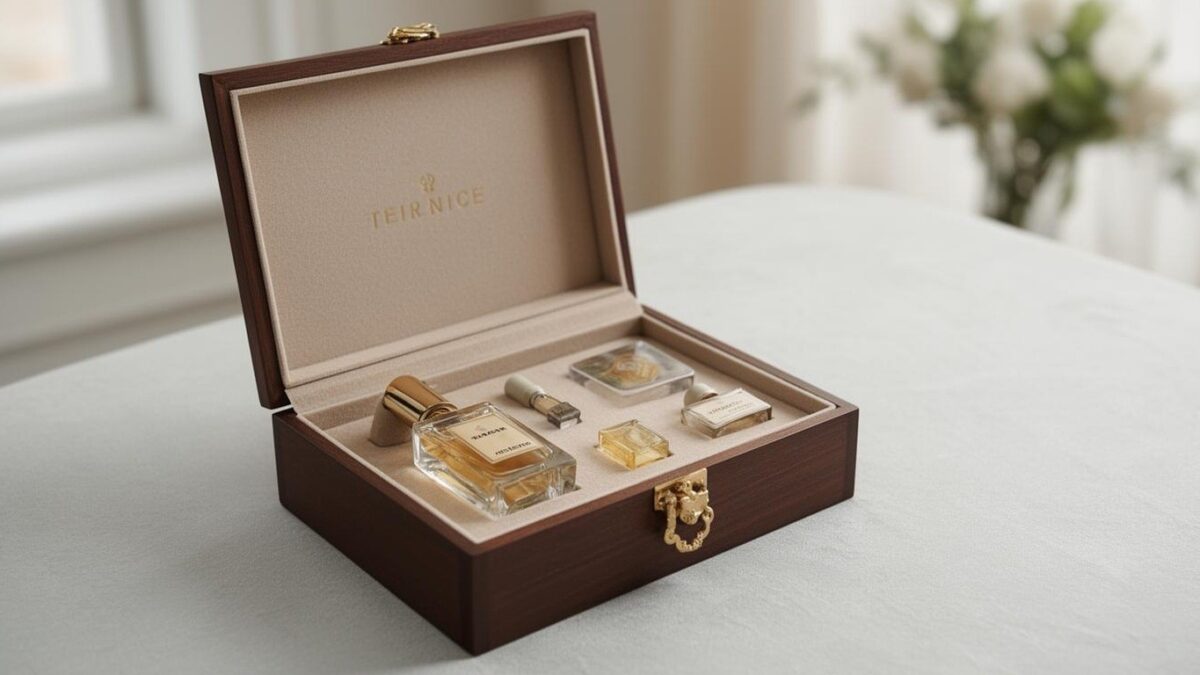

A perfume that smells wonderful on a paper strip in the shop can turn sharp or sweet an hour later on the wrist, and the bottle bought on the strength of that first sniff can end up unworn. Fragrance is a slow reveal. The first impression comes from the top notes, the character comes from the heart and the lasting base appears after a while. Judging a scent in thirty seconds is like judging a book from its first sentence, and it is the most common reason gift fragrances are disappointing.
This guide explains how to sample a fragrance properly, using paper blotters and skin tests, how long to wait before deciding and how to test a few scents without overwhelming your senses. It is about the buying process, not a claim that any method will reveal how a perfume will smell to any particular person over a whole day. For skin sensitivity or any reaction to a fragrance, speak to a physician or dermatologist and check the ingredients.
A buyer picks a bottle from the first sniff on a paper strip, then wears it all evening and finds it turns sharp on skin. The test was incomplete, and the scent was not right.
Why the first sniff misleads
When a perfume is first applied, the top notes are the most prominent. They are usually lighter and more volatile, such as citrus or herbal notes, and they evaporate quickly. Within a few minutes, the heart notes emerge, which may be floral, spicy or fruity. The base notes, often woody, musky or resinous, appear later and linger longest.
A scent judged only at the first stage may be entirely different from the scent worn all day. This is why a shop sample on a paper strip is only the beginning of the test.

Paper blotters
A paper blotter is a clean strip of paper, usually unscented, that is dipped lightly into the perfume. It is useful for comparing several fragrances quickly. Hold the blotter at a short distance, waving it gently to release the scent, and note the first impression.
Label each blotter with the name and the time, and leave it for a while. Smell it again after fifteen minutes and again after an hour. This shows the development of the scent more clearly than a single sniff. Paper cannot show how the fragrance interacts with skin, so it is a starting point, not the final test.
Skin tests
Skin shows the true character of a fragrance. Apply a small amount to the inside of the wrist or the crook of the elbow, where the skin is thinner and warmer. Avoid rubbing the wrists together, since that can crush the molecules and change the scent. Let the perfume dry naturally.
Wait at least thirty minutes before judging. Ideally, wait a few hours and check the fragrance again in a different setting, such as at home and outdoors. Skin is different from paper, and the scent can change with body heat, activity and the day’s weather.
How many to test
Testing too many fragrances at once can confuse the nose, a condition sometimes called nose fatigue. Limit each session to two or three scents. Between samples, smell your own skin or a coffee bean, if you have one, to reset your sense of smell. Some shops provide plain skin wipes or unscented paper for this purpose.
If you are testing several scents for a gift, test them on different days if you can. A second visit shows whether your first impression holds.
Taking notes
Write down the name of each scent, the first impression, the feeling after thirty minutes and the impression after a few hours. Note whether the scent was too strong, too sweet, too fresh or too heavy. These notes help you compare, and they are useful if you return to the shop later.
Sampling for someone else
If you are buying a fragrance for another person, sample a few options with their preferences in mind, and then compare them at home if the shop allows. Ask whether the seller can provide a sample or a travel size of the chosen scent. A small bottle can be given as a trial before the full size is bought.
Many shops and online sellers offer sample sets. These are a low-cost way to let the recipient try several options. Check whether the samples are the same concentration as the full bottle, since some are lighter.
Questions to ask in the store
- Can I test this on skin, and for how long can I wear the sample?
- Is there a smaller size or a sample I can take home?
- What is the return policy for an opened bottle?
- How does the fragrance change over the first few hours, according to the seller?
- Are the ingredients listed, and is there information on skin sensitivity?
A note on skin reactions
Fragrances can cause reactions in some people, including irritation, redness or itching. If you or the recipient has a history of skin sensitivity, test a very small amount on a small area first, and wait a day before using the scent more widely. Stop using any product that causes discomfort, and speak to a physician or dermatologist if a reaction persists. We do not give allergy or dermatological advice.
Our guide to fragrance families explains how scents are grouped, and eau de parfum versus eau de toilette explains how concentration affects the test.
Bottom line
Sample a fragrance properly. Use paper blotters to compare quickly, then test on skin and wait at least thirty minutes, ideally a few hours. Limit the number of scents you test in one session, take notes and ask about travel sizes or samples. A scent that holds up on skin, over time, is the one that will be worn.
Sampling mistakes
- Judging a fragrance in the first minute.
- Testing too many scents in one session.
- Rubbing the wrists together after applying perfume.
- Forgetting to check the skin test after a few hours.